


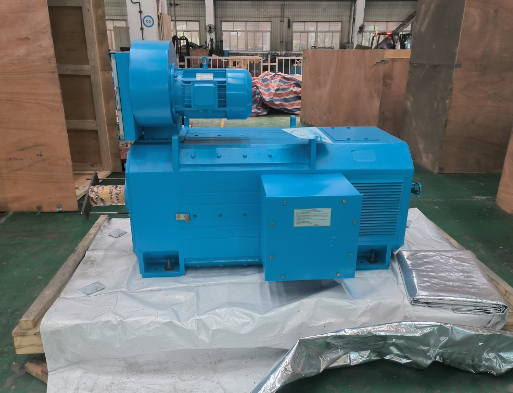


Southeast Asian Steel Mill Switch to a Simo Motor Medium Size DC Motor
A major steel mill in Southeast Asia recently experienced a sudden slowdown in its rolling line when one of its aging drive motors failed during peak production hours. The malfunction caused a noticeable drop in torque output, leading to uneven rolling thickness and forcing the plant to halt operations for emergency inspection. Initial diagnostics showed that the previous motor had suffered from worn commutators and unstable current delivery—issues that had been developing for months but went unnoticed.

To prevent future interruptions, the mill’s engineering team decided to upgrade the drive system and selected a Simo Motormedium size DC motor known for its stable torque characteristics and better thermal management. The replacement process was carried out overnight, minimizing production loss. Technicians reported that installation was straightforward due to the motor’s compact frame and compatibility with their existing control cabinet.
After restarting operations, the steel mill observed an immediate improvement in speed stability and product uniformity. Maintenance logs over the following weeks recorded lower heat buildup and significantly reduced vibration. Management later confirmed that the switch not only resolved the failure but also improved overall production reliability. The incident has since been cited in internal safety reviews as proof of the importance of updating legacy equipment before small issues escalate into large operational risks.
Simo motor Also See