


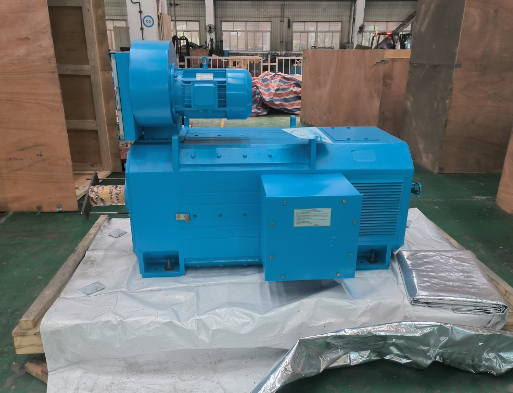


Why Does an Electric Motor Overheat? Common Causes and Solutions
Electric motor overheating is one of the most common issues affecting motor reliability and service life.
Excessive temperature rise can accelerate insulation aging, reduce efficiency, and eventually lead to unexpected motor failure.
However, motor overheating is not always caused by a motor quality problem. In many cases, it is related to application conditions, incorrect selection, or insufficient cooling.
Understanding the common causes can help prevent failures and improve motor reliability.
1. Motor Overload
One of the most common causes of overheating is operating the motor beyond its rated load.
When the motor is overloaded, the current increases, causing higher copper losses and generating more heat inside the winding.
Typical causes include:
- Equipment operating above its designed capacity
- Increased mechanical resistance
- Incorrect motor power selection
Selecting a motor based on actual load requirements is essential for reliable operation.
2. Insufficient Cooling
A motor generates heat during operation, and this heat must be effectively removed through the cooling system.
For standard Tefc Motors, cooling performance depends on the external fan and airflow.
During low-speed operation with a variable frequency drive (VFD), the cooling fan speed decreases, which may reduce heat dissipation.
In these applications, solutions such as forced ventilation motors (IC416) or other customized cooling methods may be required.
3. Incorrect Motor Selection
Different applications have different operating characteristics.
A motor suitable for a pump or fan may not be suitable for heavy-duty applications such as compressors, crushers, or mills.
Important factors include:
- Starting torque requirement
- Duty cycle
- Load variation
- Operating speed range
Choosing a motor only based on power and speed may result in overheating during actual operation.
4. Poor Installation and Operating Environment
The installation environment also has a significant impact on motor temperature.
Common factors include:
- Insufficient ventilation space
- High ambient temperature
- Dust accumulation blocking airflow
- High humidity or corrosive environments
For outdoor or harsh industrial applications, the motor design should consider the actual working conditions.
5. Incorrect VFD Operation
Variable frequency drives provide excellent speed control, but motors operating with VFDs require proper evaluation.
Problems may occur when:
- The frequency range is too wide
- The motor operates at very low speed for a long time
- The load requires constant torque at low speed
In such cases, standard motor designs may not provide sufficient cooling or thermal performance.
How to Prevent Motor Overheating?
To improve motor reliability, it is important to:
- Select the motor according to the actual application
- Confirm the correct cooling method
- Evaluate VFD operating conditions
- Consider installation environment
- Monitor load and temperature during operation
Conclusion
Electric motor overheating is usually the result of multiple factors, including load conditions, cooling performance, installation environment, and operating requirements.
A reliable motor solution is not only about selecting the correct power rating. It requires a complete understanding of how the motor will operate in the real application.
Proper selection and engineering evaluation are the keys to achieving long-term motor reliability.